Penny Foskaris is a Functional Nutrition Specialist in Anaheim Hills, CA, and the author of The Fast Foods Diet Cookbook. She has spent over 8 years helping clients lose fat and build muscle using body composition data, not scale weight, as the basis for every decision.
Most weight loss programs start with the wrong measurement. They put you on a scale. They celebrate when the number goes down. They panic when it goes up. And they never once ask the question that actually matters: what did you lose?
Because losing 10 pounds of muscle is not the same as losing 10 pounds of fat. One makes you weaker. The other makes you healthier. The scale cannot tell the difference.
This guide explains why body composition is the only metric that matters, how InBody scanning works, and how the LongevityRX protocol uses data to drive every decision in your weight loss program.
Why the Scale Is the Worst Measure of Progress
The scale measures one thing: your total relationship with gravity. It does not distinguish between fat, muscle, water, or bone. It cannot tell you whether you are getting healthier or just getting lighter.
Here is what the scale misses:
- Muscle weighs more than fat by volume. A client who loses 8 pounds of fat and gains 3 pounds of muscle will see only a 5-pound drop on the scale. But her body has changed dramatically. Her clothes fit differently. Her metabolism is faster. Her risk of metabolic disease has dropped.
- Water fluctuates daily. Hydration, sodium intake, hormonal cycles, and exercise can cause 2 to 5 pounds of variation in a single day. The scale registers all of it as “weight change.”
- Crash diets destroy muscle. Most rapid weight loss programs produce muscle loss, not fat loss. The scale goes down, but metabolic rate drops with it. When the weight comes back, and it almost always does, it comes back as fat. The person ends up heavier and weaker than before.
In my practice, I see this pattern every week. Clients come in after years of yo-yo dieting, convinced their bodies are broken. They are not broken. They have been misinformed. They have been chasing a number on a scale that was never going to tell them what they needed to know.
What Body Composition Actually Tells You
Body composition analysis measures what your body is made of: fat mass, lean muscle mass, visceral fat, total body water, and segmental distribution. This is the information you need to make decisions.
Here is what each metric means:
Fat mass. The total weight of body fat. This is what most people want to lose. But the goal is not to eliminate fat entirely. Essential fat is necessary for hormone production, organ protection, and metabolic function. The goal is to reach a healthy body fat percentage while preserving lean tissue.
Lean muscle mass. Your skeletal muscle, organs, and connective tissue. Preserving and building lean mass is critical during weight loss. Muscle drives your resting metabolic rate. Lose muscle, and your body burns fewer calories at rest. This is why people who lose weight on crash diets regain it so quickly.
Visceral fat. The fat stored around your internal organs. This is the most dangerous type of fat. High visceral fat levels are correlated with type 2 diabetes, cardiovascular disease, and metabolic syndrome. You cannot see it. You cannot feel it. But an InBody scan can measure it, and reducing it is one of the most important health outcomes we track.
Segmental lean mass. How muscle is distributed across your body: left arm, right arm, trunk, left leg, right leg. This reveals imbalances that affect posture, performance, and injury risk.
When I appeared on Dr. Oz in 2022, we discussed visceral fat specifically. It is the number one risk factor most people never measure because they are too busy watching the scale.
How InBody Scanning Works
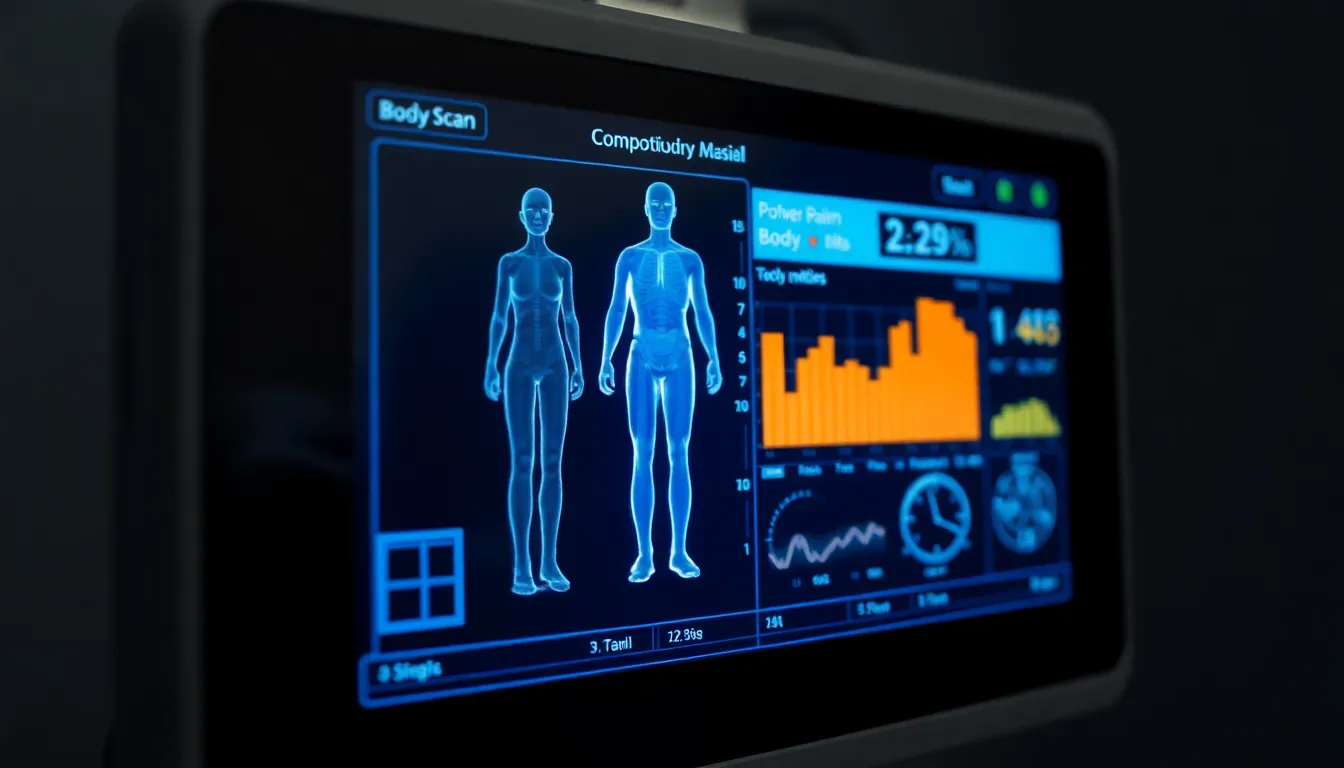
The InBody 570 uses bioelectrical impedance analysis (BIA) to measure body composition in under 60 seconds. You stand on the device, hold the hand electrodes, and the scan is complete before you have time to check your phone.
The technology sends a low-level electrical current through the body. Muscle, which contains a high percentage of water, conducts electricity well. Fat does not. By measuring impedance at multiple frequencies across five body segments, the InBody calculates precise values for fat mass, lean mass, and total body water.
The InBody 570 is clinical-grade equipment. It is the same technology used in research hospitals and sports performance labs. The accuracy is within 2% for body fat measurement, which is more precise than calipers, DEXA approximations for soft tissue, or any bathroom scale that claims to measure body fat.
At Foskaris Wellness, every client on a weight loss or body composition program gets scanned regularly. For active programs, that means weekly scans. For maintenance clients, monthly scans are sufficient.
The scan produces a detailed results sheet. We review it together. I show you exactly what changed since your last scan: how much fat you lost, how much muscle you maintained, and whether your visceral fat level went up or down. Then we adjust your protocol based on what the data shows.
Not based on how you feel. Not based on what the scale says. Based on data.
The LongevityRX Protocol: How Data Drives Every Decision
LongevityRX is not a diet. It is a measurement-first protocol that builds your nutrition, movement, and recovery plan around what your body composition data actually shows.
Here is how it works:
Week 1: Baseline scan and consultation. We run your first InBody scan and review the results. This establishes your starting point: current fat mass, muscle mass, visceral fat, and metabolic rate estimate. We set goals based on these numbers, not based on a target weight.
Week 1: Personalized protocol. Based on your scan data, I build a personalized plan: macronutrient targets (protein, carbohydrates, fat), meal timing, hydration, movement recommendations, and red light therapy schedule. Every recommendation is anchored in your specific numbers.
Weeks 2+: Weekly re-scans and adjustments. Each week, you scan again. We compare the data. If fat mass is dropping and muscle mass is stable or increasing, the protocol is working. If not, we adjust. Maybe protein needs to go up. Maybe we add a red light therapy session. Maybe we change meal timing. The decision is made from data, not from guessing.
Graduation: Maintenance phase. When you reach your body composition goals, we transition to a maintenance protocol with monthly scans to ensure your results hold.
The entry point for the Medical Weight Loss program starts as low as $79/month. You can explore the full LongevityRX program for women or LongevityRX for men to see how the protocol is structured.
Real Client Results: What the Numbers Show
Results are measured, not estimated. Every outcome below comes from InBody scan data tracked over the course of a structured program.
The pattern across our clients is consistent:
- Fat mass decreases while muscle mass is preserved or increases
- Visceral fat levels drop, often significantly, within the first 4 to 6 weeks
- Body fat percentage decreases even when total scale weight change is modest
- Clients who follow the red light therapy protocol alongside nutrition see faster fat loss results
One client lost 18 pounds and 4 inches off her waist in 8 weeks on the Weight Loss in a Box program. Another gained 4 pounds of muscle while losing 12 pounds of fat over 12 weeks. On the scale, the second client “only” lost 8 pounds. In reality, her body underwent a complete recomposition.
These are not outliers. They are what happens when you track the right data and adjust based on what it tells you. Our before-and-after gallery documents these outcomes visually.
I have helped over 3,000 people actually keep their muscle and lose their fat. The secret is not a special supplement or a magic food plan. The secret is measurement. When you know exactly what your body is doing, you can make precise adjustments instead of hoping something works.
How to Get Started with Body Composition Testing
Getting started takes one step: schedule your first InBody scan and consultation at Foskaris Wellness.
Here is what to expect:
- Call or text (714) 340-0038 to schedule your initial body composition scan and consultation.
- Your first visit takes about 30 minutes. The scan itself takes under 60 seconds. We spend the rest reviewing your results and discussing your goals.
- You leave with a plan. Not a generic meal plan from a template. A personalized protocol built around your specific body composition data.
- Weekly check-ins keep you on track. Each scan shows exactly what changed. We adjust as needed. No guesswork.
Not sure if this approach is right for you? Take the free wellness quiz to get a baseline assessment of where your body stands today.
Foskaris Wellness is located at 5100 E. La Palma Ave Suite 104, Anaheim Hills, CA 92807. We work with clients both in-office and remotely through the Weight Loss in a Box program.